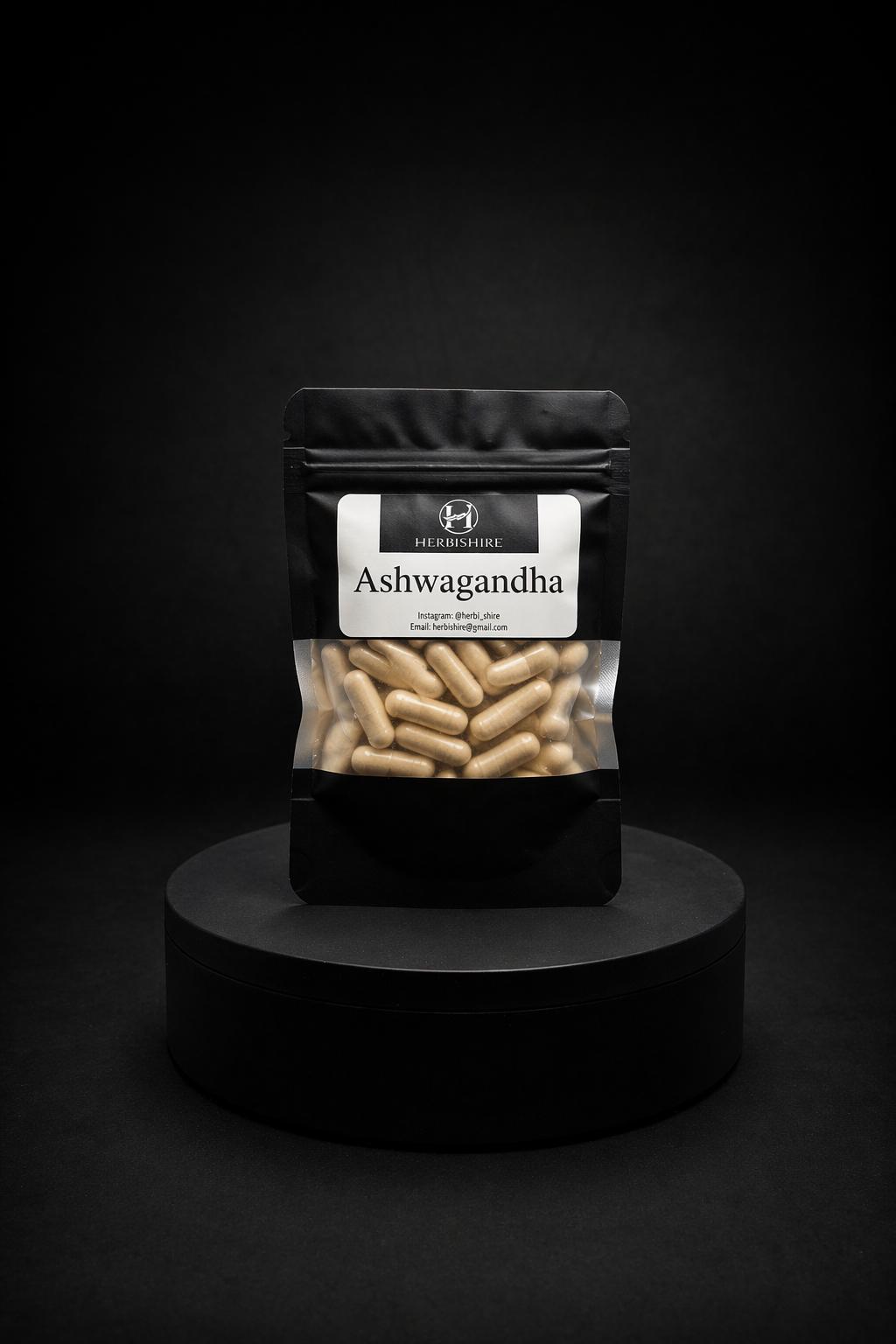

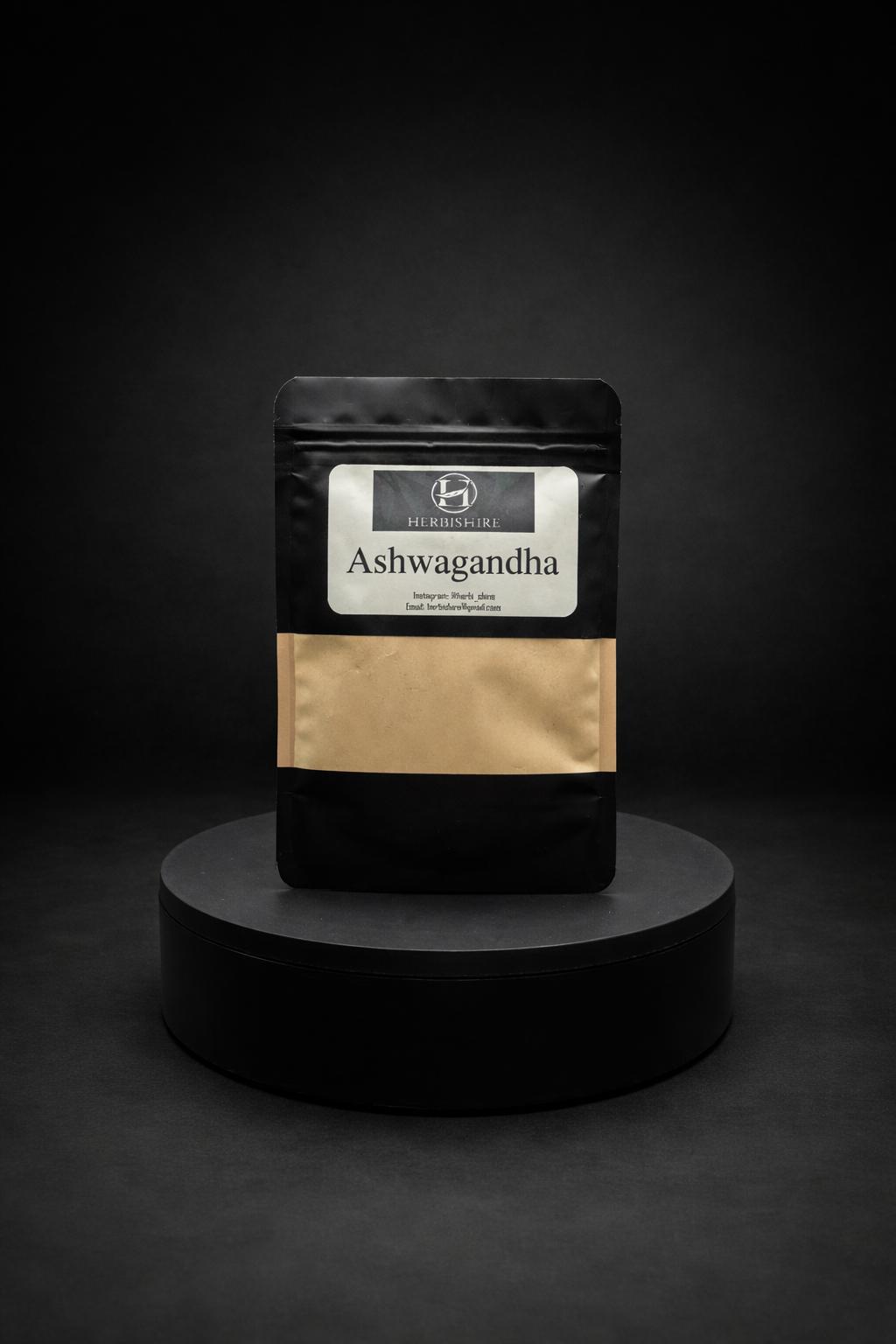
- Solanaceae
- Root, milled fine
- India · Nepal · North Africa
- Powder, standardised
Ashwagandha
Withania somnifera
Select sizeThe plant
Ashwagandha is a small evergreen shrub in the nightshade family. It produces green flowers and orange-red berries, but the root is the part most widely used in traditional preparations.
What's in it
Withanolides are a family of natural compounds found in ashwagandha. They contribute to the plant’s distinctive chemical makeup. They are part of the root’s distinctive natural chemistry.
Withanolides
Steroidal lactones found across the nightshade family. The marker compounds.
Withaferin A
The most studied individual withanolide.
Alkaloids
Including somniferine, named for the same sleep association as the species.
Iron
Present in the root in modest amounts.
How it works
Calm and resilience: Ashwagandha is traditionally used to help people cope with periods of stress and feel more settled. Herbalists call it an adaptogen—a herb associated with adapting to physical and emotional demands. Understanding the stress response: Cortisol is one of the body’s chemical messengers involved in responding to pressure. Ashwagandha’s traditional role centres on supporting resilience during demanding times. Rest and renewal: In Ayurveda, the root is valued for rest, strength and vitality. Its appeal is a calmer rhythm and a restorative daily routine.
In the tradition
For centuries, Ayurveda has classed ashwagandha as a rasayana—a restorative herb associated with strength, vitality, rest and healthy ageing.
The botanical name somnifera means “sleep-inducing,” while the Sanskrit name is linked with the strength and distinctive smell of a horse.
- 1Simmer 1–2 tsp of dried ashwagandha in 500ml water for 15–20 mins, then strain.
- 2Drink 1–2 cups daily.
- Not suitable during pregnancy.
- Check before use if breastfeeding, taking medication, or managing thyroid, autoimmune or liver conditions.
A food supplement, not a substitute for a varied diet. Speak to your doctor before use if you are pregnant, breastfeeding or taking medication.
Common questions
How do I prepare ashwagandha?
Ashwagandha is simmered as a decoction rather than steeped. Simmer 1–2 tsp of dried ashwagandha in 500ml water for 15–20 mins, then strain. Full directions are in the How to use panel above. See also: How to prepare ashwagandha root.
What is ashwagandha?
Ashwagandha (Withania somnifera) belongs to the Solanaceae family; the root is used. Origin: India, Nepal, North Africa. A celebrated Ayurvedic root traditionally used to build resilience, encourage calm and support steady everyday energy.
How should I store dried ashwagandha?
Keep it in an airtight container in a cool, dry place away from sunlight and moisture. Dried herbs are at their best for around a year.
What people say
No reviews yet
We publish reviews only from people who have actually bought Ashwagandha. Nothing seeded, nothing bought in.
Browse by wellness goal
How to prepare it