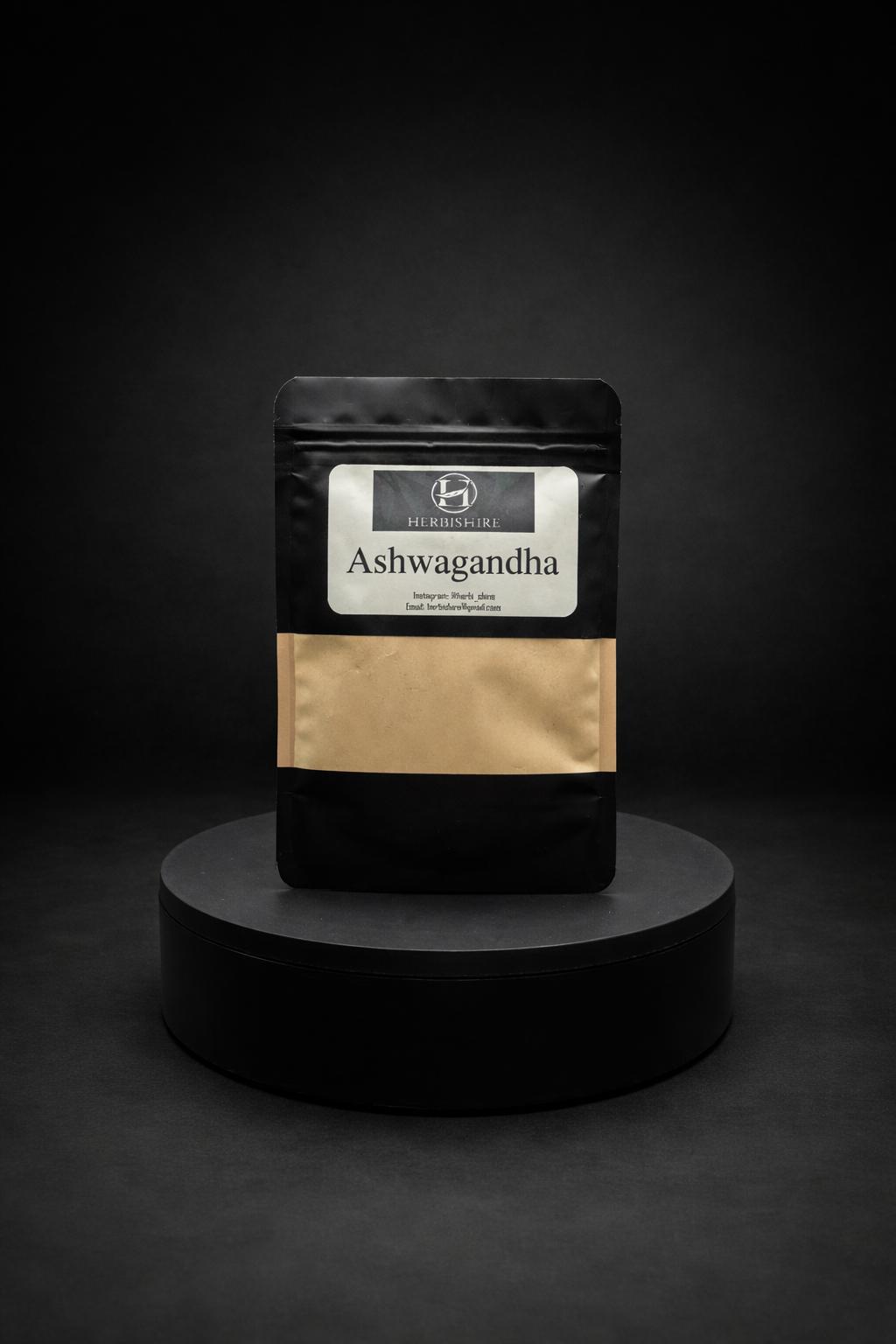

What is ashwagandha?
Ashwagandha is a small evergreen shrub in the nightshade family. It produces green flowers and orange-red berries, but the root is the part most widely used in traditional preparations.
For centuries, Ayurveda has classed ashwagandha as a rasayana — a restorative herb associated with strength, vitality, rest and healthy ageing. Ours is sourced from India, Nepal and North Africa.
Preparing ashwagandha as a tea
As a root, ashwagandha is simmered rather than steeped:
- 1Add 1–2 teaspoons of ashwagandha to 500ml of water in a small pan.
- 2Bring to the boil, then simmer for 15–20 minutes.
- 3Because ours is a fine powder, strain through a fine cloth or coffee filter, or let it settle and pour off the liquid.
- 4Drink 1–2 cups a day.
With warm milk
A traditional Ayurvedic way to take ashwagandha is stirred into warm milk — dairy or plant milk — often in the evening, sometimes with a little honey, cinnamon or cardamom to soften its earthy taste. Use the same daily amount as above.
What does it taste like?
Earthy and slightly bitter, with a faint smell that gave the plant its Sanskrit name. Warm spices, honey or milk make it easier to enjoy.
Prefer not to prepare it?
Ashwagandha is also available as capsules — take 1–2 a day with food and a full glass of water, and do not exceed the amount on the pack.
Who it is not suitable for
- Not suitable during pregnancy.
- Check with your doctor before use if you are breastfeeding, taking medication, or managing thyroid, autoimmune or liver conditions.
- A food supplement is not a substitute for a varied diet.
Last updated 2 October 2026.